By Amit Tyagi
Prerequisites
- A Meta Business Portfolio and active Facebook Page or Instagram account.
- A clearly defined business goal and measurable business outcome.
- Meta Ads Manager access.
- Basic understanding of campaigns, ad sets, audiences, creatives, placements and budgets.
- For website campaigns, Meta Pixel and preferably Conversions API.
- For lead generation, a lead form, CRM workflow or landing page.
- For ecommerce, product/catalog, checkout tracking and purchase events.
- For app promotion, app-event tracking or an appropriate measurement setup.
- Sufficient conversion data where applicable.
Introduction: The Goal Is Not a Button You Pick Randomly
One of the most common mistakes I see in Meta advertising is treating campaign objectives as labels rather than optimization instructions.
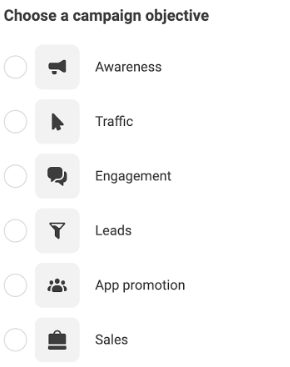
A business owner opens Ads Manager, sees options such as Awareness, Traffic, Engagement, Leads, App promotion and Sales, and chooses the one that sounds closest to what they want.
That is not always the best approach.
Your Meta campaign goal should reflect the business outcome you want Meta to optimize toward. If you need qualified enquiries, you should not automatically optimize for link clicks simply because clicks are inexpensive. If you need ecommerce purchases, an engagement campaign may generate thousands of reactions without producing meaningful revenue.
Meta’s delivery system uses the selected objective and optimization settings to find people who are more likely to perform the desired action.
Therefore, choosing the wrong goal can create a mismatch between what Meta is trying to achieve and what your business actually values.
In this guide, I will explain when to choose each major Meta advertising goal, what type of business can benefit from it, common mistakes, and several hypothetical business examples.
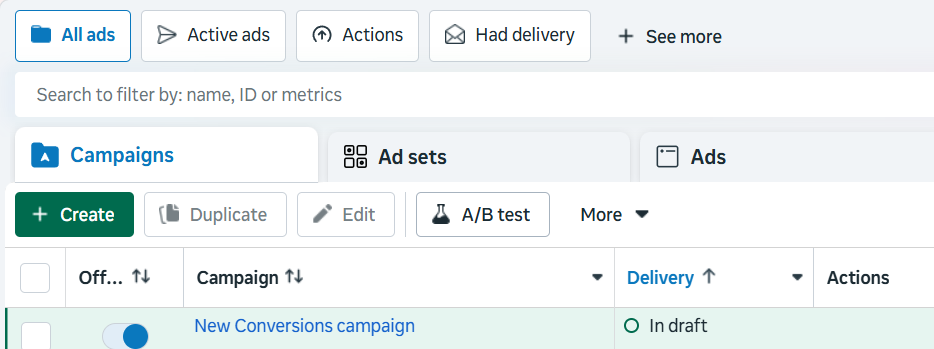
You can visit Meta Ads Manager to see your existing campaigns performance: https://adsmanager.facebook.com/adsmanager/manage/
In ads manager you can click Create to start creating a new campaign:
1. Awareness: Choose It When Reach, Recall and Brand Familiarity Matter
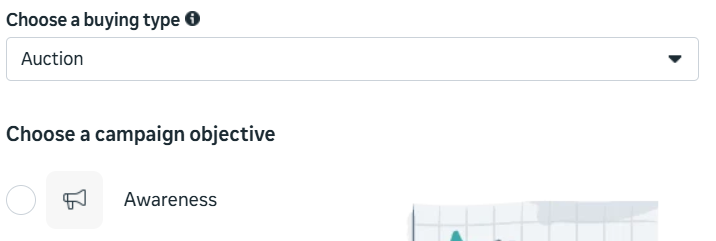
Awareness is appropriate when the primary purpose of advertising is to introduce or reinforce a brand rather than generate an immediate transaction.
This can be useful for new brands, local launches, large-scale campaigns and businesses with longer consideration cycles.
Imagine a new premium furniture brand entering Lucknow. It has a showroom, website and strong products, but almost nobody in the local market knows the brand.
Asking Meta to optimize immediately for purchases may be unrealistic if there is little conversion history.
An awareness campaign can help the brand reach relevant people and build familiarity before stronger conversion campaigns are introduced.
Another example is a university launching a new campus. A prospective student may see the advertisement today but make a decision several months later.
The immediate value is not necessarily a form submission. It can be brand recognition and repeated exposure.
However, Awareness should not become an excuse for running campaigns without measurement.
Define what success means before launching. Depending on your campaign, evaluate reach, frequency, video consumption, brand-lift indicators, branded search activity, direct traffic or later-stage conversions.
Choose Awareness when the question is:
How can I get the right people to know and remember my brand?
2. Traffic: Choose It When You Actually Need Visits
Traffic is useful when getting people to a destination is the primary objective.
That destination could be a website, landing page, blog article or another supported destination.
Suppose a software company has created a detailed comparison article titled “CRM Software for Small Businesses.”
The company wants potential customers to read the article before it later retargets them with a demo offer.
Traffic can be appropriate because the immediate objective is to bring relevant users to the content.
Another example could be a news or media website that monetizes through advertising and needs a large volume of relevant visitors.
However, cheap traffic is not automatically valuable traffic.
A campaign can generate thousands of clicks from people who do not stay on the website, engage with the content or become customers.
For lead generation or ecommerce, ask whether Meta can optimize for the deeper action you actually need.
Before selecting Traffic, ask:
“Is a visit itself a meaningful business outcome, or do I really want a lead, registration, purchase or another conversion?”
If the latter is true and you have appropriate tracking, a conversion-oriented objective may be more suitable.
3. Engagement: Choose It When Interaction Is the Outcome
Engagement is useful when interaction with your content, Page, profile, event or another supported destination is genuinely valuable.
Consider a restaurant launching a new seasonal menu.
The restaurant may want people to interact with promotional content, respond to an event or otherwise engage with the brand before visiting.
Engagement can help build an active audience.
Another example is a creator promoting an educational webinar.
Before asking for registrations, the creator might run content designed to generate meaningful engagement among a relevant audience. People who interact can later become part of a retargeting strategy.
But there is a major trap: vanity metrics.
A post receiving 20,000 reactions can look impressive while producing almost no revenue.
Engagement is valuable only when it has a strategic role in your funnel.
For example, if your actual business target is 100 qualified insurance enquiries, an engagement campaign may not be the best primary campaign.
Engagement can support the funnel, while a lead-generation campaign can focus on actual prospects.
Choose Engagement when the question is:
Do I want people to interact with this content or brand experience?
4. Leads: Choose It When Capturing Prospects Is the Main Goal
For many service businesses, Leads is one of the most important Meta objectives.
It is appropriate when your sales process begins with collecting prospect information and then qualifying, contacting or nurturing that prospect.
Imagine a digital marketing agency selling monthly SEO services.
The agency’s sales process requires a prospect’s name, business website, phone number and approximate marketing budget.
A lead campaign can be built around an instant form or website-based lead flow, depending on the business and tracking setup.
A coaching institute provides another example.
Suppose it wants enquiries for a six-month Data Analytics course.
The advertising goal is not simply to get people to read a course page. The commercial outcome is a prospective student submitting their details and eventually enrolling.
However, lead quantity should never be your only KPI.
A campaign producing 500 cheap leads can be worse than a campaign producing 100 highly qualified leads.
I recommend tracking:
- Leads
- Qualified leads
- Contacted leads
- Appointments
- Proposals
- Sales
- Cost per qualified lead
- Cost per acquisition
For local services, Leads can be particularly effective when the sales team responds quickly.
A lead that remains untouched for two days may lose significant value.
Choose Leads when the question is:
Do I need prospects to raise their hand and enter my sales process?
5. App Promotion: Choose It When App Installs or App Actions Matter
App promotion is designed for businesses whose primary customer journey happens inside a mobile application.
Imagine a food-delivery startup launching in a new city.
Its commercial model depends on customers installing the app, registering and placing their first order.
App promotion can help the business acquire users who are more likely to perform the relevant app action.
A fitness app provides another example.
Suppose the company has thousands of free installations but very few paid subscriptions.
Optimizing purely for installs may not solve the actual business problem.
If measurement supports it, the business should focus on deeper value such as registration, trial activation or subscription-related outcomes.
This illustrates an important principle:
The cheapest event is not always the best event.
If an install costs less but rarely produces a customer, optimizing for installs can create an attractive dashboard and a weak business.
Before launching app campaigns, verify app-event tracking, attribution, deep links where relevant, app-store pages and the onboarding experience.
Choose App Promotion when the question is:
Is the app the core destination and business conversion environment?
6. Sales: Choose It When Revenue or Purchase Actions Are the Goal
For ecommerce and businesses with measurable purchase events, Sales is generally the most directly revenue-oriented option.
Consider an online fashion store with a properly configured product catalog and purchase tracking.
If the store has sufficient data and its checkout process works well, a sales-focused campaign can be much more aligned with the business than a traffic campaign.
A hypothetical electronics retailer may run prospecting and retargeting campaigns designed around purchases.
The exact account structure depends on budget, audience size and historical data, but the principle remains the same:
Optimize toward the commercial action you actually value.
Sales does not mean every business should immediately choose Sales.
If a new website has almost no purchase events, broken tracking and an unclear checkout journey, selecting Sales will not magically create conversion data.
First fix:
- Tracking
- Landing pages
- Product offer
- Pricing
- Trust
- Checkout
- Customer experience
For ecommerce, also look beyond ROAS.
Evaluate contribution margin, customer acquisition cost, average order value, repeat purchase rate and profitability.
Choose Sales when the question is:
Do I want Meta to help me generate revenue-producing actions?
7. How to Choose Between Traffic, Leads and Sales
This is where many advertisers become confused because several objectives can appear relevant to the same business.
Take a hypothetical real-estate company.
It wants property enquiries.
Traffic can send users to property pages.
Leads can collect enquiry details.
Sales may not be appropriate if the actual transaction cannot be measured inside the website.
The correct choice depends on the business event that can be reliably measured and optimized.
If the company publishes property guides and wants readership, Traffic may be appropriate.
If it wants buyers to submit enquiry details, Leads is more directly aligned.
If it operates an online property marketplace where a measurable booking or paid transaction occurs, a sales-oriented setup may make more sense.
Now consider an ecommerce skincare brand.
If the business wants product purchases, Sales is generally more aligned than Traffic.
If the brand conducts free consultations where the commercial process begins with a form, Leads may be more appropriate.
The decision should therefore be based on the customer journey, not the advertiser’s preferred metric.
A useful test is:
What action would I be happiest to see happen after someone sees my advertisement?
If the answer is a purchase, build toward Sales.
If it is a qualified enquiry, consider Leads.
If it is a meaningful content visit, Traffic may be correct.
8. Hypothetical Business Case: Local Coaching Institute
Suppose a coaching institute has a monthly advertising budget of ₹1,00,000 and wants student admissions.
The institute could make several mistakes.
It might choose Traffic because website visits are inexpensive, or Engagement because videos receive many reactions.
Neither metric necessarily predicts admissions.
A more sensible funnel could use educational content to build awareness and engagement, followed by lead-focused campaigns for course enquiries.
The institute could ask about:
- Course interest
- Education level
- Preferred learning mode
- Location
- Preferred batch
The sales team could then call qualified leads.
If the institute has a strong online payment flow and users regularly purchase courses directly from the website, Sales could become more important over time.
The lesson is that the right goal can change as the business matures.
Ultimately, the institute should compare cost per qualified enquiry and cost per admission, rather than celebrating cheap clicks or large engagement numbers.
9. Hypothetical Business Case: D2C Skincare Brand
Consider a direct-to-consumer skincare company selling products online.
It has:
- A functioning website
- Product catalog
- Meta Pixel
- Conversions API
- Purchase events
- Existing purchase data
In this situation, Sales is likely to be the core objective because the desired outcome is a transaction.
The brand might still use Awareness or Engagement for creative testing and brand storytelling.
It may also use Traffic for specific content initiatives.
But the main performance engine should remain connected to revenue.
Suppose Campaign A generates 10,000 clicks at ₹4 per click but only 20 purchases.
Campaign B generates 5,000 clicks at ₹8 per click and 100 purchases.
Campaign B has a higher CPC but may be far more valuable.
This is why I advise businesses not to judge campaign quality using one metric.
CPC, CPM and CTR describe different parts of the advertising system.
Revenue, profit and customer acquisition cost tell you whether the business is actually winning.
10. Hypothetical Business Case: B2B Software Company
A B2B software company selling a product worth ₹2,00,000 per year has a much longer sales cycle.
A person may first:
- Read an article.
- Watch a product video.
- Download a resource.
- Request a demo.
- Speak with sales.
- Become an opportunity.
- Become a customer.
The company may use Traffic or Engagement for educational content, but its core performance campaign may focus on Leads if demo requests are the measurable conversion.
The company should then connect CRM data with advertising performance wherever possible.
Otherwise, Meta may optimize for form submissions while the business optimizes for closed revenue.
For example, 200 leads may sound excellent.
But if only 10 become sales opportunities and one becomes a customer, the business should investigate lead quality, targeting, offer and sales follow-up.
In B2B advertising, the best campaign is not necessarily the one that produces the most leads.
It is the one that contributes efficiently to qualified pipeline and revenue.
11. Common Meta Objective Mistakes I See
Choosing Traffic When the Real Goal Is Sales
This often produces inexpensive visits but weak commercial outcomes.
Choosing Engagement Because It Gives Impressive Numbers
Engagement can be useful, but likes and comments are not substitutes for qualified leads or purchases.
Optimizing for an Event That Is Too Shallow
If the business ultimately needs paid subscriptions, optimizing only for app installs may produce volume without value.
Changing Objectives Too Frequently
Advertising systems need enough data to learn.
Constantly rebuilding campaigns can make performance difficult to interpret.
Ignoring Tracking
An excellent campaign objective cannot compensate for missing purchase, lead or other conversion events.
Measuring Only Platform Metrics
Meta reports are useful, but your CRM, ecommerce platform, analytics and actual revenue should also influence your evaluation.
Expecting One Objective to Solve the Entire Customer Journey
Most businesses need a funnel rather than one campaign doing everything.
12. My Practical Decision Framework
Here is the framework I use when deciding which Meta advertising goal to consider.
Awareness: Use it when brand visibility and familiarity are the immediate priorities.
Traffic: Use it when meaningful visits to content or a destination are the business outcome.
Engagement: Use it when interactions with content or the brand experience have strategic value.
Leads: Use it when prospects need to enter your sales process.
App Promotion: Use it when a mobile application is the core customer environment.
Sales: Use it when measurable ecommerce or revenue-generating conversion events are the target.
Then ask a second question:
Can I accurately measure the action I am asking Meta to optimize for?
If the answer is no, fix measurement before expecting the algorithm to perform miracles.
Finally, ask whether the selected objective matches the economics of the business.
A ₹300 lead is not automatically good.
A ₹2,000 customer acquisition cost is not automatically bad.
Everything depends on lifetime value, margin, sales conversion and repeat business.
Conclusion: Choose the Goal Based on the Business Outcome
Meta advertising becomes much easier to manage when you stop thinking of objectives as campaign labels and start thinking of them as optimization directions.
The best objective is not the one that sounds impressive.
It is the one that is closest to the meaningful action you want the advertising system to generate and that you can reliably measure.
A local restaurant may use Engagement to build interest around a new menu.
A coaching institute may use Leads to generate counselling enquiries.
A D2C brand may use Sales to drive purchases.
A software company may use Leads to generate demos.
An app company may focus on App Promotion.
A new brand entering a market may begin with Awareness.
The same company can legitimately use multiple objectives because customers do not move through a single-step journey.
What matters is that each campaign has a clear role.
My recommendation is to begin with the business outcome, work backward to the measurable customer action, and then select the Meta goal that best supports that action.
Do not start with:
“Which objective is cheapest?”
Start with:
“Which outcome creates business value?”
That mindset will help you avoid vanity metrics, improve reporting quality and build campaigns connected to actual ROI rather than simply activity inside Ads Manager.
And remember: changing the objective is not a substitute for fixing an offer, landing page, creative, tracking setup, audience, sales process or product-market fit.
Meta can optimize delivery, but it cannot make a weak business proposition strong.
The strongest Meta advertising strategy combines the right objective with accurate tracking, strong creative, a relevant audience, a compelling offer, fast follow-up and disciplined measurement.
Choose the goal based on what you want the customer to do—not simply what you want the dashboard to show.
Disclaimer
This article is for educational and informational purposes only. Meta Ads features, campaign objectives, optimization options and interface labels can change over time. Always review the current Meta Ads Manager options, your tracking setup and your business data before making advertising decisions.
About Author:
BacklinkGen.com Editorial Team
The BacklinkGen.com Editorial Team is led by Amit Tyagi, Gaurav Saxena and Rachit Srivastava—professionals with expertise spanning enterprise technology, artificial intelligence, digital marketing, SEO, AI Search Optimization (AIO/GEO), content strategy, and business growth. Together, they bring decades of combined industry experience across global technology initiatives, performance marketing, and digital transformation.
Every article published on BacklinkGen.com is guided by practical experience, in-depth research, and a commitment to editorial accuracy. The team focuses on delivering trustworthy, actionable, and up-to-date insights that help businesses, marketers, and professionals stay ahead in the rapidly evolving world of search, AI, and digital marketing.