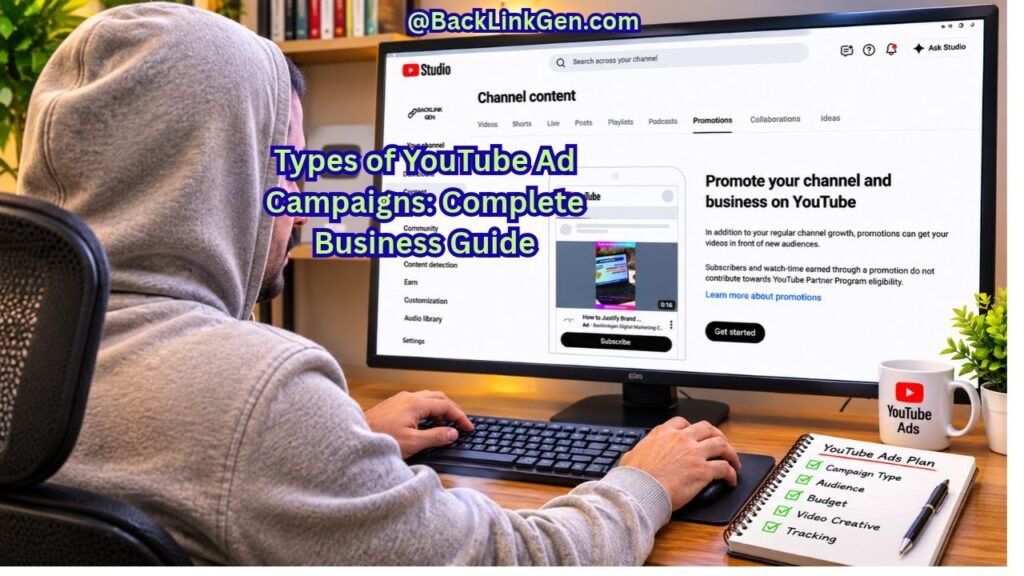
YouTube has evolved into much more than a video-sharing platform. It is now a powerful advertising channel where businesses can build brand awareness, generate qualified leads, drive website traffic, sell products, promote mobile applications, and influence purchasing decisions.
However, one common mistake I see businesses make is treating YouTube advertising as a single campaign type. They upload a promotional video, select an audience, set a budget, and expect conversions. When results do not match expectations, they conclude that YouTube advertising does not work for their business.
The reality is different.
YouTube offers multiple advertising formats and campaign approaches, each designed for a particular marketing objective. A campaign designed to introduce a new brand to thousands of potential customers should not be measured using the same metrics as a campaign designed to generate enquiries or online purchases.
In my experience working across digital marketing, Google Ads, performance campaigns, and website development, the first step towards successful YouTube advertising is understanding the business objective. The advertising format, audience, creative, bidding strategy, and landing page should all support that objective.
In this guide, I will explain the different types of YouTube advertising campaigns, how they work, which businesses should use them, and how to select the right campaign based on specific business goals.
1. YouTube Video Reach Campaigns – Build Brand Awareness
A Video Reach campaign is designed to expose your brand to as many relevant people as possible within a defined advertising budget.
The objective is not necessarily to generate an immediate purchase. Instead, you want potential customers to become familiar with your business, understand your offering, and remember your brand when they need your product or service.
Google Ads provides different reach approaches, including efficient reach, non-skippable reach, and target frequency.
Best suited for:
- New businesses entering a competitive market.
- Real estate developers launching residential projects.
- Educational institutions promoting admissions.
- Retail brands introducing new products.
- Hotels and travel companies promoting destinations.
- Healthcare brands building local awareness.
Example: Imagine you are launching a new residential property in Lucknow. You can target people interested in real estate, property investment, home loans, and residential property searches.
Your advertisement can introduce the project, highlight its location, showcase amenities, and communicate the starting price.
Important KPIs:
- Impressions and unique reach.
- CPM (Cost Per Thousand Impressions).
- Frequency.
- Brand search growth.
- Video engagement.
My recommendation is to use reach campaigns when your primary requirement is visibility rather than immediate conversions. However, awareness should still be measurable through subsequent brand searches, website visits, and enquiries.
2. YouTube Video Views Campaigns – Get More People to Watch Your Videos
If your objective is to get people to watch your videos, a Video Views campaign is an appropriate option.
Unlike a campaign focused primarily on impressions, this campaign aims to generate video views from people who are more likely to watch and engage with your content.
Depending on the campaign setup, advertisements can appear as:
- Skippable in-stream ads.
- In-feed video ads.
- YouTube Shorts ads.
This approach is particularly useful when your video itself is the product being promoted.
Which businesses should use it?
- Coaching institutes: Promote free demo classes, course introductions, and educational tutorials.
- Fitness businesses: Showcase workout demonstrations, transformation stories, and training programmes.
- Restaurants: Promote food preparation videos, signature dishes, and restaurant experiences.
- Travel agencies: Showcase destination videos, holiday experiences, and travel packages.
- Personal brands: Promote educational content, professional insights, and expertise.
- Entertainment businesses: Increase exposure to trailers, music videos, and promotional content.
Example: A digital marketing institute wants to promote its free introductory session on Google Ads. Instead of immediately asking viewers to purchase a course, it promotes an informative video explaining how Google Ads works.
Interested viewers watch the video, discover the institute, and may subsequently visit its website.
Important KPIs:
- TrueView views.
- Cost per view (CPV).
- View rate.
- Average watch duration.
- Audience retention.
- Subsequent website visits.
This campaign is particularly valuable when businesses need to establish trust through educational or demonstrative content.
3. YouTube Video Conversion Campaigns – Generate Sales and Leads
This is one of the most important campaign approaches for businesses that expect measurable commercial results from advertising.
A conversion-focused Video campaign is designed to encourage viewers to complete an action, such as purchasing a product, submitting an enquiry form, booking an appointment, or requesting a quotation.
Unlike a traditional awareness campaign, the primary focus is on measurable actions.
Best suited for:
- Ecommerce stores.
- Real estate companies.
- Educational institutions.
- Healthcare and diagnostic centres.
- Insurance and financial service providers.
- B2B service providers.
- Travel agencies.
- Software and SaaS businesses.
Example: Real estate lead generation
A property developer wants to generate enquiries for a residential project.
The video advertisement can include:
- Property location.
- Apartment configurations.
- Available amenities.
- Pricing information.
- Construction updates.
- Booking benefits.
- A clear call to action.
The advertisement directs interested users to a dedicated landing page where they can submit their contact details.
The campaign can then be optimized towards qualified lead submissions rather than simply video views.
Example: Ecommerce sales
An online fashion store can promote a collection through product demonstration videos, highlight offers, and direct customers to relevant product pages.
The campaign should be connected to accurate purchase tracking so that the advertising platform can learn from actual transactions.
Important KPIs:
- Cost per lead (CPL).
- Cost per acquisition (CPA).
- Conversion rate.
- Revenue.
- Return on ad spend (ROAS).
- Qualified lead percentage.
One important consideration: conversion campaigns require properly configured conversion tracking. If purchases, enquiries, or other meaningful actions are not recorded correctly, automated bidding cannot optimize reliably towards the intended outcome.
4. YouTube In-Feed Video Ads – Reach People Who Are Actively Exploring Content
In-feed video ads appear in discovery environments such as YouTube Home, Search, and Watch Next.
These advertisements look like video recommendations, with a thumbnail, headline, and supporting information. Users can choose to click and watch the promoted video.
This is an interesting format because the viewer takes an active step towards consuming your content.
Which businesses should consider this format?
- Online training providers.
- Product review businesses.
- Technology companies.
- Educational content creators.
- Automotive dealerships.
- Travel companies.
- Businesses with detailed product demonstrations.
Example: An automobile dealership wants to promote a new SUV.
Instead of interrupting someone else’s video, it can promote a detailed review or demonstration video through YouTube discovery placements.
A person researching SUVs may discover the advertisement, click it, and watch the complete vehicle walkthrough.
The video can cover mileage, features, safety, interiors, pricing, and financing options.
Important KPIs:
- Click-through rate.
- Cost per view.
- Video watch time.
- Engagement.
- Website traffic.
- Assisted conversions.
In-feed advertising is especially useful when customers need information before making a purchasing decision.
5. YouTube Shorts Ads – Reach Mobile-First Audiences
Short-form video has changed how people consume content. YouTube Shorts provides businesses with an opportunity to communicate their message through vertical, mobile-friendly advertisements.
Shorts advertising is particularly useful when the business can communicate its value quickly.
Best suited for:
- Fashion and beauty brands.
- Restaurants and food outlets.
- Fitness trainers.
- Travel companies.
- Consumer electronics.
- Online stores.
- Educational brands.
- Entertainment businesses.
Example: Restaurant promotion
A restaurant can create a 20-second vertical video showing its signature dishes, food preparation, ambience, and a limited-time offer.
The advertisement can communicate:
“Looking for authentic food in your city? Visit us this weekend and explore our special menu.”
A clear location reference and call to action can encourage people to visit the restaurant or explore its menu.
Creative recommendations:
- Use vertical 9:16 video.
- Capture attention within the first two seconds.
- Keep the message focused on one offer.
- Add readable on-screen text.
- Use subtitles.
- Include branding without overwhelming the content.
- Finish with a clear action.
Important KPIs:
- Reach.
- Video views.
- Engagement rate.
- Click-through rate.
- Website visits.
- Conversions.
Shorts should not simply be treated as shortened versions of traditional advertisements. They require a different creative approach, faster storytelling, and mobile-first presentation.
6. YouTube Bumper Ads – Communicate One Message in Six Seconds
Bumper ads are short, non-skippable advertisements lasting up to six seconds.
Their biggest advantage is simplicity. You do not have enough time to explain everything about your business. You need to communicate one memorable message.
Best suited for:
- Established consumer brands.
- Product launches.
- Retail promotions.
- Seasonal campaigns.
- Event announcements.
- Brand reminders.
Example: A jewellery brand launching its wedding collection could run a six-second advertisement:
“Your wedding. Your memories. Discover our new bridal collection.”
The advertisement reinforces the brand and gives viewers a reason to remember it.
Bumper ads are also useful as supporting creatives alongside longer video advertisements.
For example, a brand could first introduce its product through a longer video and subsequently use bumper ads to reinforce the same message.
Important KPIs:
- Impressions.
- CPM.
- Reach.
- Frequency.
- Brand recall.
I would not recommend using bumper ads as the only advertising format for a business that needs to explain complex services or generate highly qualified leads.
7. YouTube Non-Skippable In-Stream Ads – Deliver the Complete Message
Non-skippable in-stream advertisements require viewers to watch the advertisement without skipping it.
These ads are useful when the advertiser wants to deliver a complete message within a short duration.
Suitable businesses include:
- Automobile manufacturers.
- Consumer electronics brands.
- FMCG companies.
- Large retail chains.
- Tourism departments.
- Major event organizers.
- Established national brands.
Example: A tourism department wants to promote a state as a holiday destination.
A short advertisement can showcase mountains, historical monuments, cultural experiences, accommodation, and major attractions.
Because the advertisement cannot be skipped, the brand gets an opportunity to communicate the complete creative message.
However, non-skippable ads should not be unnecessarily long or complicated. Even when viewers cannot skip, an uninteresting advertisement can create negative brand perceptions.
Important KPIs:
- Impressions.
- CPM.
- Completed views.
- Reach.
- Frequency.
- Brand awareness.
8. YouTube Masthead Ads – Large-Scale Brand Exposure
Masthead advertising is a premium advertising placement that gives a brand prominent visibility on the YouTube homepage.
It is generally more appropriate for businesses with substantial advertising budgets and large-scale promotional requirements.
Best suited for:
- Major product launches.
- National advertising campaigns.
- Film releases.
- Large ecommerce sale events.
- Automobile launches.
- Major entertainment events.
- Large consumer brands.
Example: An automobile company launching a new electric vehicle nationwide may want maximum visibility during the launch period.
A Masthead campaign can help the company generate large-scale exposure and introduce the vehicle to a broad audience.
This is not usually the first advertising format I would recommend to a small local business. Its value is strongest when the advertiser has a major launch, substantial reach requirements, and the budget to support it.
Important KPIs:
- Impressions.
- Reach.
- Frequency.
- Video engagement.
- Website traffic.
- Brand search interest.
9. YouTube Ad Sequencing Campaigns – Tell a Story Across Multiple Advertisements
One interesting advertising approach is to show different advertisements to the same audience in a planned sequence.
Instead of showing the same advertisement repeatedly, businesses can build a journey through multiple video messages.
For example:
- First advertisement: IntroductionIntroduce the brand, product, or service and explain the problem it solves.
- Second advertisement: EducationExplain features, advantages, benefits, and how the offering works.
- Third advertisement: TrustShowcase customer experiences, testimonials, demonstrations, or case studies.
- Fourth advertisement: ConversionPresent an offer and encourage viewers to enquire, book, or purchase.
Example: Education business
An institute can introduce its Data Analytics course in the first video, explain the curriculum in the second, demonstrate a live project in the third, and invite viewers to book a counselling session in the fourth.
This strategy is useful for businesses where purchasing decisions require education, trust, and multiple interactions.
Important KPIs:
- Sequence completion.
- Reach at each stage.
- Engagement.
- Frequency.
- Leads and conversions.
The actual sequence setup and eligible formats depend on campaign configuration and available account features.
10. Demand Gen Campaigns – Combine YouTube With Other Discovery Placements
Demand Gen deserves special attention because it extends beyond traditional YouTube-only video advertising.
It can use video and image creatives across eligible Google-owned visual discovery placements, including YouTube, YouTube Shorts, Discover, and Gmail.
This provides advertisers with additional opportunities to reach potential customers.
Best suited for:
- Ecommerce businesses.
- Fashion brands.
- Beauty products.
- Consumer electronics.
- Travel companies.
- Lifestyle brands.
- Businesses with strong visual creatives.
Example: An online furniture store wants to promote its new collection.
It can use lifestyle images, product videos, and promotional creatives to reach people who may be interested in home interiors and furniture.
Instead of depending exclusively on existing search demand, Demand Gen can help introduce products to potential customers while they are discovering content.
Important KPIs:
- Click-through rate.
- Conversions.
- Cost per acquisition.
- Revenue.
- ROAS.
- New customer acquisition.
Demand Gen is not simply another name for a standard YouTube Video campaign. It is a separate campaign type with its own creative placements, targeting options, and optimization capabilities.
11. Choosing the Right YouTube Campaign for Different Business Goals
The biggest question for an advertiser is not which campaign type is available. It is which campaign type should be selected for a particular business objective.
Here is how I would approach campaign selection across different industries.
| Business type | Primary objective | Recommended approach |
|---|---|---|
| Real estate | Generate property enquiries | Video conversion campaigns |
| Coaching institute | Student admissions | Video conversion + remarketing |
| Restaurant | Local visibility and visits | Shorts + Video reach |
| Ecommerce | Online purchases | Demand Gen + Video conversions |
| Hospital | Patient enquiries | Video conversions + reach |
| Travel agency | Holiday bookings | Video views + conversions |
| Automobile dealer | Test-drive bookings | Video conversions + reach |
| SaaS company | Product demonstrations | In-feed + conversion campaigns |
| Fashion brand | Product discovery | Shorts + Demand Gen |
| Hotel | Direct bookings | Video reach + conversions |
| Event organizer | Ticket sales | Video reach + conversions |
| Personal brand | Audience development | Video views + engagement |
These are starting recommendations rather than fixed rules. The right approach depends on the product price, customer journey, geographical coverage, sales cycle, and available conversion data.
12. How to Build a Complete YouTube Advertising Funnel
A common mistake is expecting a customer to purchase immediately after watching one advertisement.
For many businesses, the buying journey involves multiple interactions.
I prefer dividing YouTube advertising into three stages.
Stage 1 – Awareness
Introduce your business
Use Video Reach, Shorts, and Video Views campaigns to introduce your products or services to relevant audiences.
Measure: Reach, impressions, views and engagement.
Stage 2 – Consideration
Build interest and trust
Show product demonstrations, educational videos, testimonials, case studies, and detailed explanations.
Measure: Watch time, engaged viewers, website visits and returning visitors.
Stage 3 – Conversion
Generate commercial results
Use conversion-focused Video campaigns and eligible remarketing approaches to encourage enquiries, purchases, bookings, and registrations.
Measure: Leads, sales, CPA, revenue and ROAS.
Let’s consider a practical example.
A training institute wants to generate 100 student enquiries for its Data Analytics programme.
The campaign structure could look like this:
Campaign 1: Awareness
Promote an introductory video explaining career opportunities in Data Analytics.
Campaign 2: Consideration
Promote videos explaining the course syllabus, practical projects, trainer experience, and student learning outcomes.
Campaign 3: Conversion
Promote an admission-focused video directing interested students to a course landing page with a counselling enquiry form.
Campaign 4: Remarketing
Reach eligible previous website visitors and engaged video viewers with relevant admission messages.
This approach gives the advertiser multiple opportunities to communicate with potential students instead of depending on one advertisement.
13. Audience Targeting Strategies for YouTube Advertising
Even a professionally produced advertisement can perform poorly when it reaches the wrong audience.
Audience selection should reflect the customer’s interests, intent, demographics, location, and stage in the purchasing journey.
Here are some important targeting approaches.
Demographic targeting: Select relevant age groups, parental status, household characteristics, and other available demographic signals.
Custom segments: Reach people based on relevant search terms, interests, and online research behaviour supported by the campaign’s targeting options.
In-market audiences: Reach people showing purchase-related interest in relevant product or service categories.
Affinity audiences: Reach people based on broader interests and lifestyle patterns.
Remarketing audiences: Reconnect with eligible previous website visitors, customers, and people who have interacted with your YouTube content.
Placement targeting: Select relevant YouTube channels, videos, or other eligible placements where supported by the campaign type.
My recommendation is to avoid combining every possible audience into one campaign. Create meaningful audience groups, test their performance, and evaluate whether they generate valuable business outcomes.
Also, remember that targeting controls differ across campaign types. Some campaign formats use audience signals and automated optimization rather than providing complete manual placement or audience control.
14. Budget Planning and Performance Measurement
There is no universal YouTube advertising budget that works for every business.
A local restaurant, an online education company, and a national automobile manufacturer have completely different advertising requirements.
I recommend starting with the business economics.
For example, suppose an educational institute wants to acquire students for a course priced at ₹30,000.
If the business can afford ₹3,000 to acquire one paying student, the advertising strategy should be designed around that acquisition target.
However, the institute must also account for the percentage of enquiries that convert into admissions.
If 10% of qualified leads become paying students, the business needs to understand how much it can afford to spend on each qualified lead.
This is where conversion tracking and sales data become essential.
Some important metrics include:
- CPM: Cost per thousand impressions.
- CPV: Cost per view.
- CTR: Click-through rate.
- CPC: Cost per click.
- CPL: Cost per lead.
- CPA: Cost per acquisition.
- ROAS: Return on advertising spend.
- Conversion rate: Percentage of users completing the desired action.
Never evaluate a campaign using only one metric. A campaign generating inexpensive views may not generate valuable customers, while a campaign with a higher cost per view may attract a more relevant audience.
15. Common Mistakes to Avoid in YouTube Advertising
Even with the right campaign type, poor execution can waste advertising budgets.
Here are some mistakes I recommend avoiding.
1. Using one video for every campaign: Awareness, consideration, and conversion require different messages and creative approaches.
2. Ignoring the first five seconds: Viewers should understand the relevance of the advertisement immediately, particularly when they have the option to skip it.
3. Sending everyone to the homepage: Use relevant landing pages that match the advertisement’s message and offer.
4. Ignoring conversion tracking: Configure website and business conversions correctly before relying on automated bidding.
5. Targeting audiences that are too broad: Audience relevance is important, especially when the business serves a specific location or customer category.
6. Measuring only views: Views are useful for awareness campaigns, but they cannot independently establish commercial profitability.
7. Stopping campaigns too early: Allow sufficient time and conversion data for meaningful performance evaluation rather than making decisions based on a few days of results.
8. Neglecting mobile creatives: Many users consume YouTube content on mobile devices. Ensure that your advertisements are easy to understand on smaller screens.
16. My Recommended YouTube Advertising Strategy
After working with different digital marketing objectives, I believe YouTube advertising should be planned around the customer’s decision-making process rather than the availability of advertising formats.
Here is how I would approach different business categories.
For local businesses: Start with geographically relevant Video Reach campaigns and Shorts creatives. Once you identify audiences generating meaningful engagement, test conversion campaigns for enquiries, appointments, and visits.
For educational institutions: Use educational videos to introduce courses, demonstrate practical learning, explain career opportunities, and generate admission enquiries. Remarketing can help reconnect with interested students.
For ecommerce businesses: Combine product demonstration videos, Shorts, and Demand Gen campaigns. Measure actual purchases and revenue rather than relying exclusively on engagement.
For B2B companies: Use educational content, product demonstrations, customer case studies, and conversion-focused campaigns. B2B customers generally require more information and trust before submitting an enquiry.
For established brands: Combine reach campaigns, bumper advertisements, non-skippable formats, and sequencing to build consistent brand visibility.
The most important principle is to maintain a connection between advertising and business performance. Every campaign should have a clearly defined purpose, a measurable outcome, and a creative strategy that supports the customer’s next step.
Conclusion: YouTube Advertising Is a Business Growth Channel, Not Just a Video Promotion Tool
YouTube offers businesses multiple ways to communicate with potential customers. However, selecting an advertising format without understanding the business objective can lead to inefficient spending and misleading performance reports.
A business looking for brand awareness needs a different strategy from a business looking for immediate sales. Similarly, a coaching institute generating admission enquiries requires a different advertising approach from an ecommerce company promoting hundreds of products.
My recommendation is to begin with three questions:
- What do we want the customer to do after seeing our advertisement?
- What information does the customer need before taking that action?
- How will we measure whether the advertising investment is generating business value?
Once these questions are answered, selecting the appropriate YouTube campaign becomes much easier.
As a digital marketing specialist, I also recommend treating YouTube as part of a larger performance marketing ecosystem. Connect advertising with landing pages, analytics, conversion tracking, audience remarketing, and customer relationship management systems.
Do not chase inexpensive views simply because they look impressive in a campaign report. Focus on relevant reach, meaningful engagement, qualified enquiries, customer acquisition, and revenue.
The objective of advertising is not merely to make people watch your business. It is to help the right people discover your business, understand its value, and eventually become customers.
Disclaimer:
This article is intended for educational and informational purposes only. Advertising performance, costs, reach, and conversion rates vary depending on industry, audience, competition, creative quality, targeting, and campaign settings. Google Ads features and campaign availability may change over time. Businesses should evaluate their objectives, tracking configuration, and budgets before launching campaigns. Results are not guaranteed, and independent testing is recommended.
About Author:
BacklinkGen.com Editorial Team
The BacklinkGen.com Editorial Team is led by Amit Tyagi, Gaurav Saxena and Rachit Srivastava—professionals with expertise spanning enterprise technology, artificial intelligence, digital marketing, SEO, AI Search Optimization (AIO/GEO), content strategy, and business growth. Together, they bring decades of combined industry experience across global technology initiatives, performance marketing, and digital transformation.
Every article published on BacklinkGen.com is guided by practical experience, in-depth research, and a commitment to editorial accuracy. The team focuses on delivering trustworthy, actionable, and up-to-date insights that help businesses, marketers, and professionals stay ahead in the rapidly evolving world of search, AI, and digital marketing.