By Amit Tyagi — Senior Digital Marketing Specialist & Web Development Strategist
I spent the last few weeks pulling conversion data on a set of clients who were genuinely winning at video SEO. One of them had a TikTok hit the top of search for a high-intent query. Another had a YouTube Short pulling six figures of views a month. Both were ranked, both were visible, and both had basically flat sales to show for it. That’s the paradox I keep running into, and it’s the thing almost nobody in the “video is king” crowd wants to talk about.
Here’s what actually happened when I dug into the attribution. The views were real. The rankings were real. But the path from a 30-second Reel to a considered purchase — and most of these clients sell things that take thought, not impulse — was broken in ways their dashboards didn’t capture. Video SEO has gotten very good at one job: getting content seen. It has stayed quiet about the harder job: getting that visibility to mean anything for the business.
I’ve been in digital marketing for 18+ years, and I’ve watched this exact pattern play out before, just on a different platform. Early Google search had wide-open competitive territory, and a well-optimized page from a smaller player could outrank an established brand. That window didn’t stay open, and the people who treated ranking as the goal rather than the start of the funnel got left behind. Video is repeating that mistake in 2026.
The ranking illusion: visibility metrics are lying to you
The uncomfortable truth is that most video dashboards are built to make you feel good, not to tell you the truth. A Reel at 2 million views looks like a win. But when you trace those views, the overwhelming majority are passive scrollers who watched two seconds and kept moving. Platforms optimize for watch time and engagement because that’s what sells their ad inventory — not because it sells your product.
I’ve watched this play out with roughly a dozen clients running aggressive short-form video programs. The ones celebrating “ranking #1 for our category” were the same ones who, three months later, couldn’t point to a single attributable sale. The data is remarkably consistent: video views correlate weakly with conversions when the product requires any degree of consideration. A $40 skincare item behaves differently from a $4,000 B2B service, and most advice treats them as if they’re the same.
What the data actually shows is that short-form video is brilliant at top-of-funnel awareness and almost useless at bottom-of-funnel conversion on its own. TikTok and Instagram’s own attribution studies, along with independent work from SparkToro and others, point to the same conclusion: short video drives discovery, then the buyer leaves the app and finishes the journey somewhere else. If your measurement stops at the platform, you’re measuring a fraction of a journey and calling it the whole thing.
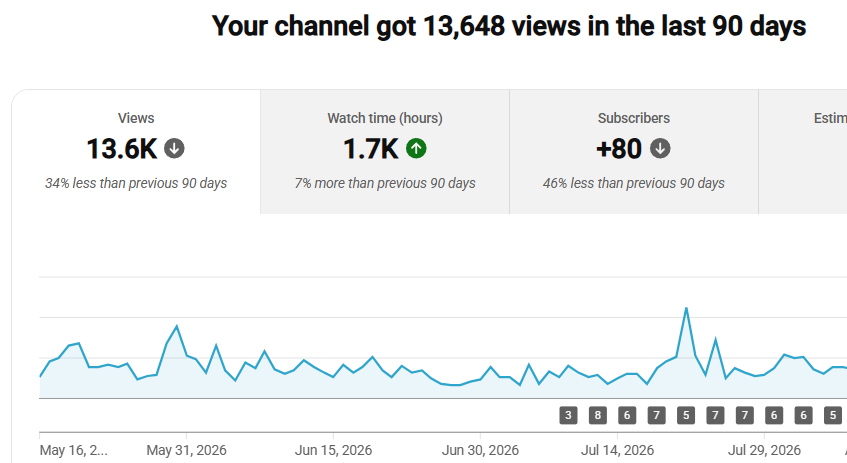
This lines up exactly with what I see in GA4 accounts where clients have properly set up cross-channel tracking. The video touch almost never closes. It assists. And assisted conversions are the part of the report most marketing teams ignore because it’s harder to brag about in a meeting.
Attribution is the real skill, not editing
The practical implication is that the bottleneck isn’t your content quality. It’s your ability to follow a human being from a 15-second clip to a checkout, a demo request, or a branded search. Most businesses can’t do that, so they assume video “doesn’t convert” and either quit or double down on more volume, hoping the math eventually works.
I’d tell a client to start by fixing the simplest gap first: a unique landing page for each video campaign with its own UTM and its own offer. I can’t count the number of Reels I’ve seen that link straight to a homepage. A homepage is a museum; a landing page is a sales conversation. When you send video traffic to a page that actually continues the story from the video, conversion rates move in ways that ranking a Short never accomplished.
Then there’s the measurement most teams skip entirely: branded search lift. Here’s what happens when video actually works. Someone watches your clip, doesn’t buy, leaves the app, and a week later types your brand name into Google. That’s a conversion video earned, but it shows up as “organic branded search,” not video. If you’re not watching your branded query volume alongside your video output, you are flying blind on the single most important signal video produces.
I genuinely believe the agencies winning at video in 2026 are the ones who’ve stopped reporting views and started reporting influence. Influence is messier. It’s a lift in direct traffic, a bump in branded searches, a prospect who mentions “I saw you on TikTok” on a sales call. That’s the real ROI, and it’s almost never in the native analytics.
Video’s real value in the AI search era: brand signals
Now let me connect this to something bigger, because this is where video gets interesting for anyone building long-term authority. We’re in a period where generative engines — ChatGPT, Gemini, Perplexity, the AI Overviews in Google — decide which brands to mention based on how present and credible you are across the web. Video is one of the few content formats that’s still genuinely hard to commoditize. A thousand AI-written blog posts look the same. A real person explaining something on camera does not.
The practical implication for authority building is significant. When your videos rank and get embedded, cited, and referenced across the web, they become a third-party signal that AI systems pick up. I’ve watched client videos get pulled into answer snippets and cited as sources in ways their written content never was. Video scarcity works in your favor here: there’s less of it, it’s harder to fake, and it carries a human credibility that text struggles to match.
This is exactly the kind of work Backlinkgen helps clients with — not just earning links, but earning the brand mentions and citations that AI engines treat as trust signals. A video that ranks and gets referenced is a citation machine. That’s the gap authority-building work is built to close, and it’s exactly where we’d love to help.
But I want to be honest about the stage of this trend. The role of video as an AI citation source is an emerging pattern I’m monitoring, not a settled science. The platforms change how they surface sources every few months. I’m watching this, and I’d caution anyone who tells you there’s a fixed playbook for “ranking in AI answers” with video. There isn’t yet. What I can say with confidence is that being visibly, credibly present across formats makes you harder to ignore, and that has held true across every platform shift I’ve lived through.
What actually works: a measurement-first approach
So if ranking Shorts and Reels isn’t the goal, what is? I’d tell a client to build the video program backward from the conversion they care about, not forward from the content they can produce. Pick the one action that matters — a demo booked, a product purchased, a lead captured — and engineer the video and its destination around moving a human toward that action.
The practical implication is a short list of habits that separate video that earns from video that entertains. Set up proper UTMs and campaign-specific landing pages so you can see the assisted path. Watch branded search volume as a lagging indicator of video impact. Track mentions of your brand on sales calls and in inbound emails. And stop reporting native views to leadership as if they’re revenue — they’re reach, and reach is only valuable when you can connect it to the next step.
I’ve watched clients cut their video spend in half, refocus on three campaigns with real landing pages and offer alignment, and outperform the scattershot “post daily” approach they’d been told was mandatory. The myth that keeps wasting people’s time is that volume and ranking are the metrics of success. They’re the metrics of activity. Revenue is the metric of success, and the two have quietly diverged.
The uncomfortable truth is that most video SEO advice is written by people whose income depends on you believing more video is always better. It isn’t. A focused, measurable, authority-building video strategy beats a high-ranking, zero-converting one every single time, and I’ve got the client data to back that claim.
Where this leaves you
The video SEO paradox isn’t really a paradox once you stop confusing visibility with value. Ranking a Short is a real skill, and the people who do it well deserve credit. But ranking and revenue sit at opposite ends of a funnel that most brands have never bothered to build in the middle. Fix the middle — attribution, landing pages, branded-search tracking, citation building — and the top starts to pay off.
I’d tell any marketing leader reading this to do one thing this quarter: pick your best-performing video and trace what actually happened after someone watched it. Not the views. The next step. If you can’t find it, that’s your project, not making another Reel. The businesses that figure this out in 2026 will own their categories before the window closes, the same way early movers owned early Google. The ones that keep celebrating rankings will wonder why the traffic never turned into money.
— Amit Tyagi
About Author:
Amit Tyagi is a Senior Digital Marketing Specialist and Web Development Strategist with over 15 years of experience in SEO, website development, and data-driven digital growth. He has successfully built and optimized more than 50 websites across various industries, helping businesses improve online visibility, generate leads, and increase revenue through strategic digital marketing.
His expertise spans search engine optimization (SEO), content strategy, conversion-focused web development, marketing automation, and analytics-driven decision making. Amit combines technical development skills with advanced digital marketing strategies to create high-performing digital ecosystems for brands.
Throughout his career, Amit has worked on eCommerce, B2B platforms, and enterprise-level digital projects, delivering scalable solutions that align technology with business goals. He is also known for sharing insights on modern SEO trends, AI-driven marketing, and future digital strategies.
Amit believes that the future of marketing lies at the intersection of technology, data, and strategic storytelling.