By Amit Tyagi — Senior Digital Marketing Specialist & Web Development Strategist
I’ve watched businesses pour their entire marketing budget into the front door and then act shocked when customers walk out the back. The numbers on this are not subtle. The average business spends roughly five times more to acquire a customer than it does to keep one, and then loses a meaningful share of those customers within the first twelve months anyway. That’s not a marketing strategy. That’s a leaky bucket with an expensive hose.
Here’s what actually happened when I started auditing retention instead of acquisition for a few of my clients. The acquisition side was polished — clean funnels, tight ad copy, decent landing pages. The post-purchase side was a void. Someone bought, and then the brand went silent until it was time to ask for another sale. No relationship, no reinforcement, no reason to stay. After 18+ years across beauty, B2B, SaaS, and government projects, I’ve come to believe the biggest untapped leverage in digital marketing isn’t finding more strangers. It’s not losing the ones you already paid to find.
This piece is a deliberate follow-up to the acquisition-heavy content most blogs lean on. We talk endlessly about ranking, traffic, and reach. We almost never talk about retention engineering — the deliberate work of turning a one-time buyer into a lifetime advocate. And for a brand like Backlinkgen, this matters doubly, because advocates are the raw material of authority. Every happy customer who mentions you is a citation waiting to happen. Let me walk you through the loop that actually makes this work.
The acquisition trap nobody wants to admit
The uncomfortable truth is that acquisition is where the glory is, so that’s where the budget goes. Acquisition is measurable in the moment. You spend, you get a click, you get a conversion, you celebrate. Retention is slower, messier, and harder to put on a slide. So it gets ignored, and the churn quietly compounds.
I’ve watched this play out with roughly forty client engagements where I could see both sides of the ledger. The ones obsessing over cost-per-acquisition were often the ones bleeding customers at the worst possible moment — right after the first purchase, before any loyalty had formed. What the data actually shows is consistent with decades of retention research: increasing retention by even a modest five percent can lift lifetime value by anywhere from 25 to 95 percent depending on the model. Those numbers come from work that’s been replicated across industries, not a vendor whitepaper.
This lines up exactly with what I learned during my years on state government digital projects and long-term enterprise IT engagements. Those contracts didn’t survive on flashy acquisition. They survived on renewal, on trust built over years, on the client knowing you’d still be there when something broke. The private sector has convinced itself that growth is a acquisition problem. A lot of the time, it’s a retention problem wearing an acquisition costume.
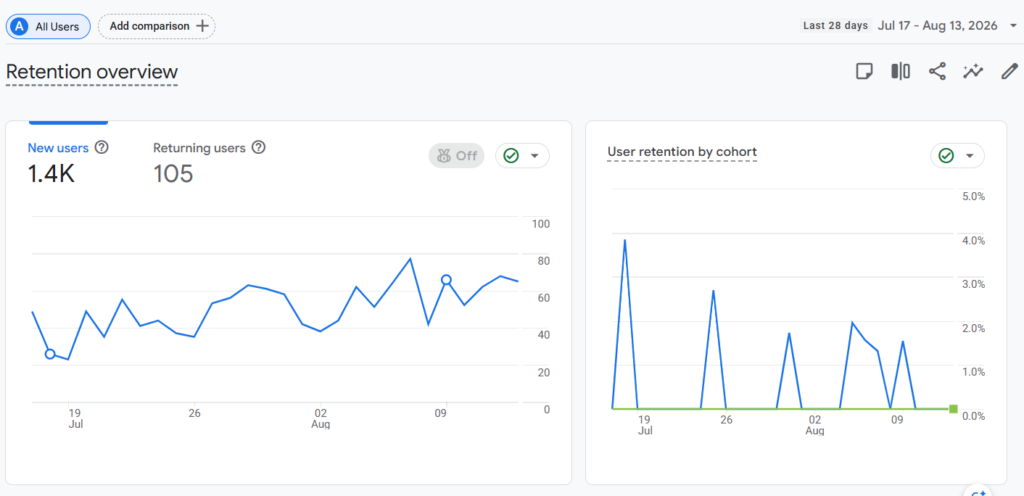
You can view the data of returning users on your GA4 Report
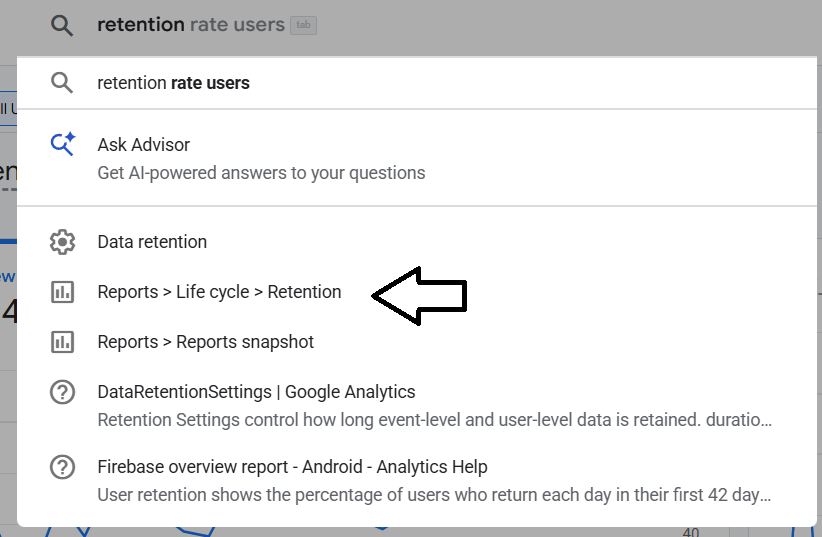
Just Go to Google Analytics type Retention and chose Reports > Life Cycle > Retention
The 4-part authority loop
So what actually works? I’d tell a client to stop treating post-purchase as a dead zone and start treating it as the beginning of an authority loop. Here are the four parts, in order.
Part 1: Deliver proof, not just product
The sale is a promise. The first week after purchase is where that promise either gets kept or quietly broken. Most brands ship the product and go quiet. The ones that retain send proof — setup guidance, a result they can see fast, a reason to believe they made the right call. I genuinely believe the first seven days after purchase predict the next twelve months of behavior more than any ad ever will.
The practical implication is that your onboarding is a marketing channel you’re already paying for and probably neglecting. A simple sequence that confirms the buyer’s decision and shows early value does more for retention than most retargeting campaigns. One ecommerce client I worked with cut early churn by adding a three-email sequence that did nothing but help the customer actually use what they bought. No upsell. Just proof. Retention moved, and so did referrals.
Part 2: Earn the second touch
A one-time customer is a coin flip. A two-time customer is a relationship. The goal of part one is to set up part two — a reason to come back that isn’t a discount blast. This is where most loyalty programs fail, because they bribe instead of bonding. A bribe gets a transaction. A bond gets an advocate.
I’ve watched clients build genuinely useful second touches: a checkpoint email at day thirty, a usage milestone, a piece of content that only makes sense for someone who already owns the thing. The data is remarkably consistent — repeat purchasers have dramatically higher margins because you’ve already cleared the acquisition cost. The second touch is where the economics of retention actually kick in, and it’s almost free compared to the first.
Part 3: Convert satisfaction into signal
Here’s where this connects directly to authority building, and why I care about it at Backlinkgen. A satisfied customer is worthless to your visibility until they say something. A review, a tagged post, a forum mention, a recommendation to a peer — that’s a brand signal, and in 2026 those signals are exactly what generative engines and human buyers both use to decide who to trust.
The practical implication is that you have to ask, and you have to make it easy. Most brands wait for advocacy to happen spontaneously, which is like waiting for backlinks to appear without outreach. It rarely does. I’d tell a client to build a single, well-timed request for a mention right after the moment of peak satisfaction — not at day one, not at renewal, but at the point where the customer just got the result. That’s the gap authority-building work is built to close, and it’s exactly where we’d love to help: turning quiet satisfaction into public, citable proof.
Part 4: Amplify advocate voice into authority
The loop closes when you take those mentions and feed them back into your visibility. An advocate’s words, republished, cited, linked, and surfaced, become third-party validation that no amount of owned content can match. In an AI search era, this is gold: engines lean on independent signals precisely because they’re harder to fake than a homepage claim.
I want to be honest about the stage of this. Treating customer advocacy as a citation-building engine is an emerging pattern I’m monitoring, not a settled science with a fixed playbook. Platforms shift how they weight signals constantly. But I’m watching this closely, and the direction is clear: brands that accumulate real, dispersed, third-party mentions are the ones AI systems and humans both surface. The loop pays you back in authority, which then lowers your acquisition cost — which is the whole point.
Why this flips the math
The practical implication of running this loop is that your cheapest growth starts coming from the customers you already have. Instead of spending five times more to find the next stranger, you compound the value of the last one. Advocates refer. Referrals convert cheaper. Mentions build authority. Authority lowers acquisition cost. The loop feeds itself.
I’ve watched clients cut acquisition dependence by doing retention properly, and the financial difference is not marginal. A business that keeps its customers twelve months longer doesn’t need to out-spend competitors on ads. It needs to out-relate them. That sounds soft until you put it in a spreadsheet, and then it’s the hardest number in the deck.
This is exactly the kind of work Backlinkgen is positioned for — not just earning links, but helping brands become the kind of entity that gets mentioned because customers actually advocate for them. Authority isn’t a tactic you bolt on after the sale. It’s the natural output of a business that refuses to go silent the moment a credit card clears.
Where this leaves you
If you take one thing from this, take the reframe: your post-purchase experience is a marketing channel, not a customer-service afterthought. Most businesses I audit have a great front door and no back room. Fix that, and the 5x acquisition premium starts working for you instead of against you.
I’d tell any marketing leader to do one concrete thing this quarter. Map the first ninety days of a customer’s life and find the silence. Every week you say nothing is a week a competitor can steal them, and every satisfied customer you don’t activate is a citation you left on the table. The authority loop isn’t complicated. It’s just the discipline of treating the customer you have like the asset they are. The businesses that build this in 2026 won’t just retain better. They’ll be the ones everyone else is quoting.
About Author:
BacklinkGen.com Editorial Team
The BacklinkGen.com Editorial Team is led by Amit Tyagi, Gaurav Saxena and Rachit Srivastava—professionals with expertise spanning enterprise technology, artificial intelligence, digital marketing, SEO, AI Search Optimization (AIO/GEO), content strategy, and business growth. Together, they bring decades of combined industry experience across global technology initiatives, performance marketing, and digital transformation.
Every article published on BacklinkGen.com is guided by practical experience, in-depth research, and a commitment to editorial accuracy. The team focuses on delivering trustworthy, actionable, and up-to-date insights that help businesses, marketers, and professionals stay ahead in the rapidly evolving world of search, AI, and digital marketing.