By Amit Tyagi, Senior Digital Marketing Specialist & Web Development Strategist, BacklinkGen
Over the past year, I’ve had the same conversation with a dozen different CMOs and founders. It usually starts with, “Our traffic looks fine, but something feels off.” When we dig into the data, the pattern is almost always the same — a growing share of qualified visitors are arriving not through a traditional search click, but through an AI agent that already did the research, compared the options, and shortlisted the business on the buyer’s behalf.
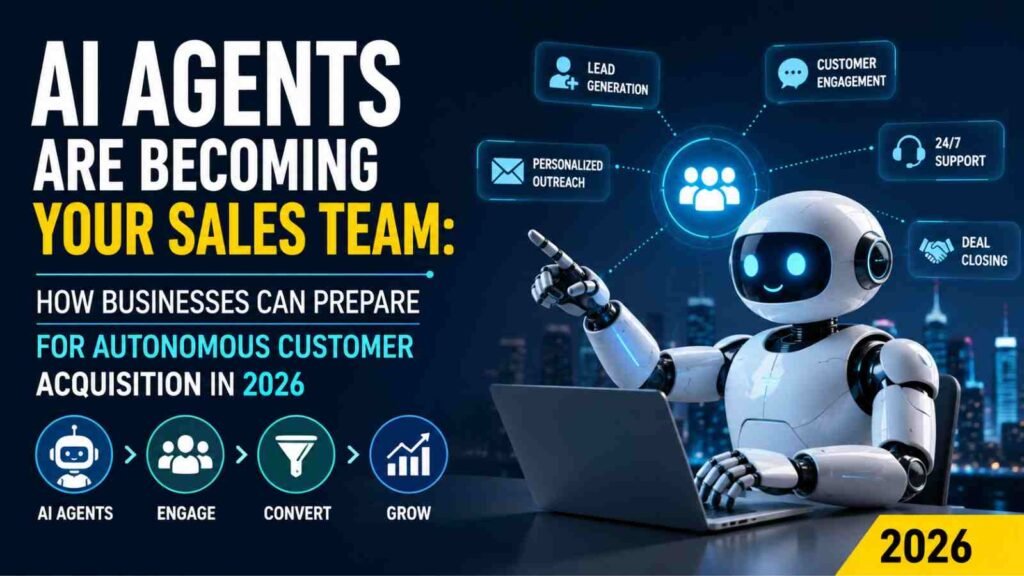
That’s not a future trend. It’s happening right now, in Q3 2026, across SaaS, eCommerce, professional services, and B2B. AI agents built on models like GPT, Gemini, Claude, and Perplexity aren’t just answering questions anymore — they’re browsing, comparing, filling forms, booking demos, and in some cases, completing purchases autonomously. In effect, they’re starting to behave like an extension of your sales team, except they work for the buyer, not for you.
In this article, I want to walk you through what’s actually changing, why it matters more than most marketing teams currently realize, and — most importantly — what a business needs to do today to be visible, trusted, and selected by these autonomous systems. This isn’t theoretical. I’ve spent the last several months restructuring client websites, content, and technical infrastructure specifically for this shift, and the businesses moving early are already seeing the benefit in qualified pipeline.
Let’s get into it.
1. What “AI Agents as Your Sales Team” Actually Means
When people hear “AI agents,” they often picture a chatbot on a website. That’s not what I’m talking about here. I mean autonomous AI systems acting on behalf of the buyer — researching vendors, evaluating pricing pages, reading reviews, checking documentation, and in agentic browser environments, actually clicking through your site, filling out forms, or triggering a purchase flow, all without a human directly steering every step.
Think about how procurement already works inside many companies. A junior analyst is asked to shortlist three vendors for a new tool. In 2026, that “analyst” is increasingly an AI agent instructed to research options, compare features and pricing, check credibility signals, and present a summary with recommendations. The agent behaves like a tireless SDR working exclusively for the buyer’s interests.
This flips the traditional acquisition funnel. Historically, your sales and marketing teams controlled the narrative — nurture sequences, retargeting, sales calls, negotiation tactics. Now, a meaningful part of that evaluation happens before any human at your company is even aware a prospect exists. The agent has already formed an opinion about your business based on what it could read, parse, and verify online.
I’ve seen this play out directly with client data. Several BacklinkGen clients in the SaaS and professional services space have started seeing referral traffic and direct signups with no identifiable click path — a strong signal that an AI agent researched and recommended them, and the human simply acted on that recommendation. That’s a fundamentally different acquisition channel than anything we optimized for even two years ago, and it demands a different playbook.
2. Why This Shift Is Happening Now, Not Later
A few converging forces are driving this shift in 2026 specifically. First, agentic browsing capabilities matured significantly — AI systems can now navigate live websites, interpret forms, and take multi-step actions rather than just summarizing static content. Second, enterprise adoption of AI copilots for procurement, research, and vendor evaluation has become mainstream rather than experimental. Third, consumer-facing AI assistants have gotten comfortable making purchase-adjacent decisions, from comparing insurance quotes to booking services.
None of this happened overnight, but the cumulative effect has been fast. In my own audit work, I’ve watched AI-referral traffic go from a rounding error to a measurable, growing line item in analytics within about twelve months for several clients.
There’s also a trust dimension worth mentioning. Buyers — especially B2B buyers dealing with complex, high-consideration purchases — are increasingly comfortable delegating early-stage research to AI because it removes a huge amount of manual comparison work. Nobody wants to manually open twenty tabs to compare CRM platforms anymore when an agent can do it in minutes and produce a structured comparison.
For businesses, the practical implication is this: if your digital presence isn’t structured in a way that AI systems can accurately read, verify, and trust, you’re not just losing rankings — you’re being excluded from consideration entirely, often without ever knowing it happened. That’s a much bigger risk than a slipping keyword position, and it’s why I’m urging clients to treat this as a priority now rather than a “watch and wait” item for next year.
3. From Search Engines to Answer Engines to Agent Engines
I talk to clients a lot about the evolution from SEO to AEO (Answer Engine Optimization) to what I now call agent-readiness. It’s worth breaking down because each stage requires a different technical and content approach.
Traditional SEO optimized for ranking in a list of ten blue links, where a human made the final click decision. Answer Engine Optimization, which picked up steam through 2024 and 2025, focused on getting content selected as the direct answer inside AI-generated responses — think featured snippets evolving into full conversational answers in ChatGPT or Gemini. Now we’re entering a third stage, where AI agents don’t just answer questions, they act on them: navigating your site, extracting structured facts, checking your credibility, and executing tasks like filling a contact form or comparing your pricing table against a competitor’s.
Each stage builds on the last but adds new requirements. Good SEO fundamentals are still necessary — you can’t skip them. But agent-readiness demands that your content and website be machine-actionable, not just machine-readable. That means clean structured data, consistent entity information across the web, clear pricing and feature data that isn’t buried in images or PDFs, and forms and CTAs that are simple enough for an automated system to interpret correctly.
In practice, I’ve found that businesses who already invested seriously in technical SEO and structured data have a real head start here. The gap between “well-optimized for Google” and “well-optimized for autonomous agents” is smaller than most people assume, but it’s not zero — and closing it now, while most competitors haven’t started, is where the real opportunity sits.
4. How Autonomous Buying Behavior Changes Your Marketing Funnel
The classic funnel — awareness, consideration, decision — still exists, but AI agents are compressing and reshaping it. Awareness might now happen entirely through an agent summarizing your category without a human ever visiting a search results page. Consideration might happen through an agent reading five competitor websites in parallel and generating a structured comparison your prospect never asks you to see. By the time a human enters the picture, a large part of the decision may already be pre-formed.
This has a direct implication for how you measure and attribute marketing performance. If your analytics setup only tracks last-click or even multi-touch attribution based on human sessions, you’re going to miss an increasingly important part of the picture — the AI-assisted research phase that happens before a session even begins in the traditional sense. I’ve started recommending clients track AI-referral traffic (from perplexity.ai, chatgpt.com, gemini.google.com, and similar sources) as a distinct channel in GA4, and to watch branded search volume and direct-traffic-with-no-referrer as leading indicators of agent-driven discovery.
It also changes what “top of funnel” content needs to accomplish. Instead of writing purely to attract human eyeballs and hold attention, you’re also writing to be extracted, quoted, and trusted by a machine that’s going to summarize you to a decision-maker. That means factual accuracy, clear structure, and verifiable claims matter more than clever headlines or emotional hooks at this stage.
The businesses that adapt fastest here are treating their website less like a brochure and more like a well-organized knowledge base that both humans and machines can navigate efficiently. That reframing alone changes a lot of the content and design decisions you’ll make going forward.
5. Structured Data, Entity SEO, and the Machine-Readable Foundation
If there’s one technical priority I’d put above all others for agent-readiness, it’s structured data and entity consistency. AI agents rely heavily on structured signals — schema markup, consistent NAP (name, address, phone) data, Organization and Product schema, FAQ schema, and clean knowledge graph associations — to verify who you are, what you offer, and whether you’re credible enough to recommend.
I’ve audited websites that rank well organically but have almost no schema markup implemented, inconsistent business information across directories, and no clear entity definition tying their brand, founders, products, and services together in a machine-readable way. These sites are essentially invisible to an agent trying to verify credibility, even if a human finds them easily through a Google search.
Practical priorities I recommend to clients: implement Organization, Product/Service, FAQPage, and Review schema comprehensively; ensure your business name, description, and offerings are worded consistently across your website, Google Business Profile, LinkedIn, industry directories, and press mentions; and build out a clear “About” and “Team” presence that establishes real entities — actual people with real expertise — rather than vague corporate language.
Entity SEO isn’t new, but its importance has grown substantially because AI systems are essentially building an internal knowledge graph of your business every time they crawl or query information about you. The more consistent, structured, and verifiable that information is, the more confidently an agent will represent you accurately — and recommend you — to a prospective buyer. Get this foundation wrong, and no amount of clever content marketing will fully compensate for it.
6. Building Topical Authority So Agents Recognize You as a Trusted Source
AI agents don’t just look at individual pages in isolation — they evaluate whether a domain demonstrates genuine depth and authority on a topic before trusting it as a source. This is where topical authority becomes critical, arguably more so than it was for traditional SEO alone.
Topical authority means your website comprehensively covers a subject area with genuine expertise, not just a handful of scattered blog posts targeting individual keywords. If you’re a B2B SaaS company selling project management software, an AI agent evaluating your credibility is effectively asking: does this business demonstrate deep, consistent expertise across the whole category — implementation, integrations, comparisons, use cases, pricing, industry-specific applications — or does it just have one decent blog post that happens to rank?
I usually recommend clients build content in topic clusters rather than isolated articles: a strong pillar page covering the core topic broadly, supported by a network of interlinked, specific articles that go deep into subtopics, objections, comparisons, and use cases. This structure does two things simultaneously — it helps traditional search engines understand your site’s depth, and it gives AI agents a coherent, well-connected body of content to draw from when constructing an answer or recommendation about your category.
It’s also worth noting that topical authority compounds. A single article rarely moves the needle on its own, but a well-built cluster of thirty or forty genuinely useful, interlinked articles on a subject creates a gravitational pull — both for search rankings and for AI systems that are trying to identify which sources are consistently reliable on a given topic. This is slow, deliberate work, and it’s exactly the kind of long-term digital asset-building I’ve always advocated for over quick-fix tactics.
7. Website and Technical Readiness for Agentic AI Interactions
Beyond content, your actual website infrastructure needs to be built in a way that AI agents can navigate and act on reliably. This is a newer consideration, and honestly, most websites I audit aren’t ready for it yet.
A few technical priorities matter here. First, Core Web Vitals and page speed still matter — agents interacting with slow, unstable pages are more likely to fail a task or abandon it, which means a lost opportunity even if your content was strong. Second, forms and CTAs need clean, semantic HTML with clear labels; an agent trying to fill out a contact or demo request form struggles with vague field names, overly complex JavaScript-rendered forms, or CAPTCHA implementations that block automated but legitimate agent traffic entirely — something worth reconsidering carefully rather than blocking indiscriminately.
Third, make sure your robots.txt and crawl settings aren’t inadvertently blocking legitimate AI crawlers you actually want indexing your content — GPTBot, Google-Extended, PerplexityBot, and ClaudeBot, among others. I’ve found misconfigured robots.txt files blocking these crawlers on a surprising number of otherwise well-optimized sites, effectively making the business invisible to the exact systems now influencing purchase decisions.
Fourth, pricing and product information should be presented in clean, extractable formats — actual HTML tables and text, not screenshots or PDFs, which agents often can’t parse reliably. I’ve had clients recover a meaningful amount of AI-referenced visibility simply by rebuilding a pricing page from an image-based table into properly structured HTML with accompanying schema markup.
Getting this technical layer right isn’t glamorous work, but it’s foundational. Without it, even excellent content and messaging won’t reach the agents evaluating you on your buyer’s behalf.
8. Content Strategy: Writing for Answers, Not Just Articles
The way I approach content strategy has shifted meaningfully over the past year. It’s no longer enough to write a well-researched, keyword-optimized article. Content now needs to be structured so that individual facts, comparisons, and recommendations can be cleanly extracted and cited by an AI system constructing an answer or recommendation.
Practically, this means leading with clear, direct answers near the top of a section rather than burying the useful information under three paragraphs of preamble. It means using genuine comparison tables, numbered steps, and clearly labeled sections rather than dense narrative paragraphs that bury the key facts. It means answering the specific questions your buyers are actually asking — including comparison questions like “X vs Y” and “best [category] for [use case]” — because these are exactly the query types agents are handling on behalf of users.
I also encourage clients to include original data, case studies, and specific numbers wherever possible. Generic, generic-sounding content that could have been written about any company in the category gives an AI agent nothing distinctive to cite or recommend you for. Specific results, named clients (with permission), real numbers, and documented processes give both human readers and AI systems something concrete and credible to point to.
One thing I’d caution against: don’t over-optimize into robotic, listicle-only content that reads well to a crawler but poorly to an actual human decision-maker. The businesses winning this transition are writing content that genuinely serves both audiences — clear enough structurally for a machine to parse and cite accurately, but written with real expertise and voice that a human reader trusts and finds valuable. That balance is exactly what EEAT was always meant to reward, and it’s more relevant now than ever.
9. Trust Signals, EEAT, and Why Verification Matters More Than Ever
Experience, Expertise, Authoritativeness, and Trust — EEAT — has become even more central in an agent-driven world, because AI systems are, in a very real sense, performing a trust evaluation every time they decide whether to recommend your business. An agent isn’t loyal to you the way a human relationship built over a sales cycle might be; it’s optimizing purely for accuracy and reliability on behalf of the buyer it serves.
This means real author bios with verifiable credentials matter. Genuine case studies with specific, checkable outcomes matter. Third-party validation — reviews, press mentions, industry recognition, verifiable client logos — matters. Consistent, accurate information across your website and external sources matters, because discrepancies read as a credibility risk to a system trying to verify facts before recommending you.
I always tell clients: assume an AI agent is going to fact-check every claim on your website against outside sources before it recommends you to a prospective buyer. If your website says you’ve served “500+ clients” but there’s no supporting evidence anywhere else online, that claim carries little weight in an agent’s evaluation. If your team page lists experts with no LinkedIn presence or industry footprint, that’s a trust gap too.
This is exactly why I include a note like this directly in my own articles — my claims about 15+ years of experience and 50+ websites built are things a reader, or an AI system evaluating this content, should be able to verify through my professional history, case studies, and public work. That verifiability is not a nice-to-have anymore; it’s becoming a core ranking and recommendation factor in an AI-mediated search landscape, and businesses that treat EEAT as a checkbox rather than a genuine practice will find themselves increasingly excluded from agent-driven recommendations.
10. Preparing Your Sales and Marketing Teams for an AI-Agent-Driven Pipeline
Technology and content changes are only half the equation — your internal teams need to adapt how they think about pipeline and lead qualification too. Sales teams need to understand that a growing share of “cold” inbound leads have actually already done substantial research through an AI agent before ever engaging with a human. That changes what the first sales conversation should look like; the prospect may already have a comparison of your product against two competitors sitting in their head, formed by an agent’s summary.
I’d recommend training sales teams to ask directly, early in a conversation, how the prospect found and evaluated the business — this is genuinely useful qualitative data that most companies aren’t systematically collecting yet, and it will only become more valuable as this trend accelerates through 2026 and beyond.
Marketing teams need new KPIs too. Alongside traditional organic traffic and conversion rate, I’m now recommending clients track AI-referral traffic, brand mention frequency across AI platforms (there are emerging tools for this), and — where possible — direct testing of how major AI systems describe and recommend the business compared to competitors. This last one, essentially auditing your own “AI visibility,” is quickly becoming as standard a practice as checking your Google rankings.
Cross-functional alignment matters more here than in most previous shifts. IT and web development need to prioritize technical agent-readiness alongside marketing’s content and structured data work. Sales needs marketing’s insight into what agents are saying about the business. Leadership needs to understand this isn’t a future consideration — it’s an operational priority for maintaining pipeline quality and volume starting now. Businesses that treat this as purely a marketing department initiative will move slower than those that recognize it as a company-wide strategic shift.
How Team BacklinkGen Can Help
This is exactly the kind of transition where having an experienced team guiding the process makes a measurable difference, because the work spans technical SEO, content strategy, structured data, and website development simultaneously — and most businesses don’t have all of that expertise in-house.
At BacklinkGen, we help businesses prepare for autonomous customer acquisition through a structured, practical process. We start with a comprehensive AI-visibility audit — assessing how ChatGPT, Gemini, Claude, and Perplexity currently describe and recommend your business compared to competitors, and identifying the specific gaps in structured data, entity consistency, and content depth that are holding you back. From there, we build out the technical foundation: implementing comprehensive schema markup, cleaning up entity information across your web presence, and rebuilding technical elements like pricing pages, forms, and crawl settings so they’re genuinely agent-accessible.
On the content side, our team develops topical authority content clusters designed specifically to be both human-valuable and machine-extractable, backed by real data, case studies, and EEAT-aligned author credibility. We also help set up the analytics infrastructure to properly track AI-referral traffic and agent-driven conversions, so you’re not flying blind on a channel that’s only going to grow in importance.
Because our team works across SaaS, eCommerce, healthcare, finance, professional services, and B2B enterprise clients, we bring pattern recognition from what’s actually working across industries right now — not theoretical best practices, but tested approaches refined through real implementation. If your business is serious about staying visible and competitive as AI agents take on a larger share of the buyer’s research and shortlisting process, this is exactly the kind of long-term digital infrastructure work we specialize in.
Conclusion
AI agents acting as an extension of your buyer’s research and decision-making process is one of the most significant shifts I’ve seen in digital marketing in the past fifteen years — arguably bigger than the shift to mobile-first indexing or the early rise of content marketing, because it changes not just how visibility is earned, but who — or what — is doing the evaluating.
The businesses that will win in this environment aren’t necessarily the ones with the biggest marketing budgets. They’re the ones building genuinely strong technical foundations, structured and verifiable content, real topical authority, and authentic trust signals — the same principles that have always driven sustainable digital growth, just applied to a new and rapidly evolving audience of autonomous evaluators. My advice to every client right now is the same: start treating AI agents as a legitimate, growing channel today, because the businesses that adapt early are going to have a meaningful head start over those who wait until it’s an obvious, crowded priority for everyone else.
If you’d like a clear picture of how your business currently shows up to AI agents — and a practical roadmap to improve it — that’s exactly the conversation Team BacklinkGen is set up to have with you.
About Author:

Amit Tyagi is a Senior Digital Marketing Specialist and Web Development Strategist with over 15 years of experience in SEO, website development, and data-driven digital growth. He has successfully built and optimized more than 50 websites across various industries, helping businesses improve online visibility, generate leads, and increase revenue through strategic digital marketing.
His expertise spans search engine optimization (SEO), content strategy, conversion-focused web development, marketing automation, and analytics-driven decision making. Amit combines technical development skills with advanced digital marketing strategies to create high-performing digital ecosystems for brands.
Throughout his career, Amit has worked on eCommerce, B2B platforms, and enterprise-level digital projects, delivering scalable solutions that align technology with business goals. He is also known for sharing insights on modern SEO trends, AI-driven marketing, and future digital strategies.
Amit believes that the future of marketing lies at the intersection of technology, data, and strategic storytelling.