
Hi, I’m Amit. In today’s highly competitive digital landscape, SEO is no longer based on guesswork, assumptions, or random keyword stuffing. Modern businesses need data-driven SEO strategies that rely on analytics, user behavior, search intent, and measurable performance indicators. Whether you run an eCommerce store, a service business, a SaaS platform, or a local enterprise, analytics-driven SEO helps you make smarter decisions that improve rankings, traffic, engagement, and conversions.
Data-driven SEO focuses on understanding what users are searching for, how they interact with websites, which pages perform best, and where opportunities exist for optimization. Tools like Google Analytics, Google Search Console, heatmaps, CRM systems, and SEO platforms provide valuable insights that help marketers refine campaigns continuously. Instead of creating content blindly, businesses can identify audience needs, analyze competitors, and optimize strategies using real-time information.
Analytics also allows brands to measure ROI more accurately. You can track user journeys, identify high-converting keywords, monitor bounce rates, and optimize technical SEO based on actual performance metrics. This leads to better resource allocation, improved campaign efficiency, and stronger business growth.
In this article, I’ll explain how data-driven SEO transforms digital marketing campaigns and why analytics should become the foundation of every modern SEO strategy.
1. Understanding User Search Intent Through Analytics
One of the biggest advantages of data-driven SEO is the ability to understand user search intent more accurately. Traditional SEO often focused only on keyword volume, but modern analytics helps businesses understand why users search for certain queries and what type of content they expect to find.
By analyzing search behavior, click-through rates, session durations, and user journeys, businesses can determine whether users are seeking information, comparing products, or looking to make immediate purchases. This allows marketers to create targeted content that directly addresses customer needs.
Google Search Console provides insights into the exact queries users type before visiting a website. Analytics tools reveal which pages satisfy user expectations and which fail to retain visitors. When businesses understand user intent properly, they can optimize landing pages, blog posts, service pages, and product descriptions more effectively.
Intent-based SEO also improves conversion rates because visitors find exactly what they are looking for. Instead of driving irrelevant traffic, businesses attract highly qualified audiences more likely to convert into customers.
Data-driven intent analysis helps brands align content with different stages of the customer journey. Informational content supports awareness, comparison pages support consideration, and optimized sales pages improve conversion potential.
This strategic approach results in better engagement, reduced bounce rates, higher rankings, and stronger long-term SEO performance.
2. Using Keyword Analytics for Better Content Planning
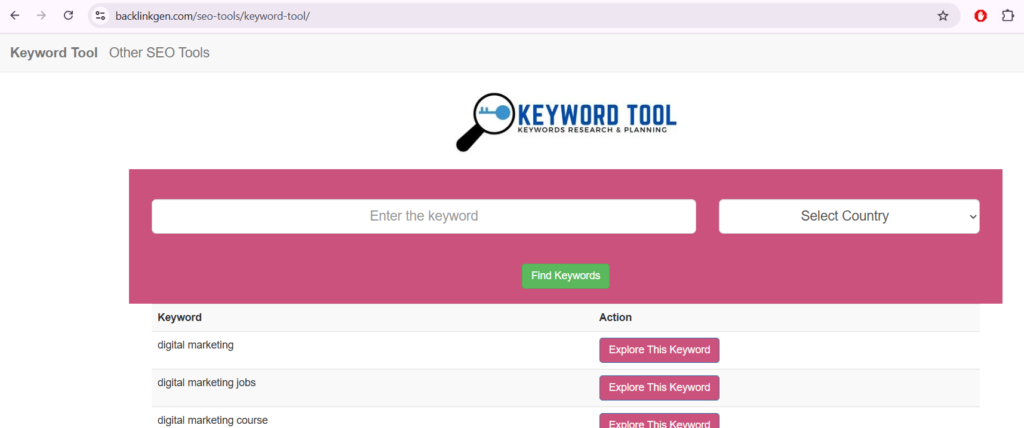
You can use Backlinkgen Keyword Research Tool to analyze trending keywords for any topic.
Keyword research has evolved significantly with the rise of analytics-driven SEO strategies. Today, businesses can use keyword analytics not only to identify search terms but also to understand trends, competition levels, and user engagement patterns.
Advanced SEO tools provide data about keyword difficulty, search volume, click potential, seasonal fluctuations, and audience behavior. This helps businesses prioritize keywords that deliver maximum business value instead of simply targeting high-volume phrases.
Analytics also helps identify long-tail keywords that often have lower competition and higher conversion potential. These keywords reflect more specific user intent and allow businesses to rank faster in niche markets.
Content planning becomes far more strategic when supported by keyword data. Businesses can identify content gaps, discover trending topics, and analyze competitor keyword strategies. This ensures that every blog, landing page, or product page serves a defined SEO objective.
Analytics platforms also help track keyword performance over time. Businesses can monitor ranking changes, identify declining keywords, and update content accordingly. This continuous optimization process improves visibility and organic traffic growth.
By using keyword analytics effectively, businesses create highly targeted content that aligns with audience interests, search demand, and market opportunities while maximizing SEO ROI.
3. Improving Website Performance Through Behavioral Data
User behavior analytics plays a critical role in improving SEO campaign performance. Search engines prioritize websites that provide excellent user experiences, and behavioral data helps businesses identify areas requiring improvement.
Metrics such as bounce rate, average session duration, pages per session, and click paths provide valuable insights into how users interact with websites. If visitors leave quickly, it may indicate poor content quality, slow loading speed, weak design, or irrelevant information.
Heatmaps and user recordings provide deeper insights into scrolling behavior, click patterns, and navigation habits. Businesses can identify which sections users engage with most and optimize layouts accordingly.
Analytics also helps improve internal linking strategies by identifying high-performing pages and guiding users toward important conversion points. Better navigation improves user engagement and supports SEO performance.
Page speed analytics helps businesses identify technical issues affecting user experience. Faster websites reduce abandonment rates and improve search rankings.
By continuously monitoring behavioral metrics, businesses can refine website structure, optimize calls-to-action, improve readability, and create more engaging digital experiences. These improvements contribute directly to stronger SEO results and higher conversion rates.
Data-driven behavioral optimization ensures that SEO strategies focus not only on attracting traffic but also on delivering meaningful user experiences that encourage long-term engagement.
4. Leveraging Competitor Analytics for SEO Advantage
Competitor analysis is one of the most powerful applications of data-driven SEO. Businesses can use analytics tools to study competitor strategies, identify opportunities, and build stronger campaigns.
SEO analytics platforms reveal competitor keyword rankings, backlink profiles, top-performing content, traffic sources, and audience engagement metrics. This information helps businesses understand what works in their industry and where gaps exist.
By analyzing competitor content strategies, businesses can identify underserved topics, emerging trends, and opportunities to create better content. Instead of copying competitors, brands can build more valuable and comprehensive resources that outperform existing content.
Competitor backlink analysis helps businesses discover authoritative websites linking to industry leaders. These insights support more effective outreach and link-building campaigns.
Analytics also allows businesses to benchmark their SEO performance against competitors. Metrics like domain authority, organic traffic growth, and keyword visibility provide valuable context for evaluating campaign effectiveness.
Data-driven competitor analysis reduces guesswork and helps businesses make informed strategic decisions. It allows brands to adapt quickly to industry changes and maintain competitive advantages in search rankings.
In crowded digital markets, businesses that leverage competitor analytics effectively often gain stronger visibility, higher authority, and better long-term SEO performance.
5. Tracking SEO ROI with Conversion Analytics
One of the most important benefits of data-driven SEO is the ability to measure return on investment accurately. Traditional marketing methods often struggle to track precise performance outcomes, but SEO analytics provides measurable insights into campaign effectiveness.
Conversion analytics helps businesses understand which keywords, pages, and traffic sources generate leads, sales, or inquiries. Instead of focusing only on rankings or traffic volume, businesses can evaluate actual business impact.
Google Analytics and CRM integrations allow marketers to track complete customer journeys. Businesses can identify how organic visitors interact with websites, which pages influence conversions, and where drop-offs occur.
This information helps optimize marketing budgets and prioritize high-performing SEO activities. Businesses can invest more resources into content, keywords, and campaigns that deliver measurable revenue growth.
Analytics also helps identify underperforming pages that attract traffic but fail to convert. Businesses can improve calls-to-action, page design, and content quality to increase conversion rates.
Data-driven ROI tracking ensures that SEO strategies align with broader business goals. Instead of treating SEO as a vanity metric exercise, companies can demonstrate tangible financial value and justify long-term digital marketing investments.
Measuring SEO ROI accurately creates greater accountability, smarter decision-making, and more sustainable business growth.
6. Enhancing Technical SEO with Data Insights
Technical SEO is essential for website visibility, and analytics plays a major role in identifying technical issues that impact rankings and user experience.
SEO auditing tools provide detailed insights into crawl errors, broken links, indexing issues, duplicate content, mobile usability problems, and page speed performance. These issues can negatively affect search rankings if left unresolved.
Analytics-driven technical SEO allows businesses to prioritize fixes based on impact. Instead of making random technical changes, businesses can focus on problems that directly affect user experience and organic visibility.
Core Web Vitals analytics helps businesses optimize loading performance, interactivity, and visual stability. Search engines increasingly prioritize websites offering smooth and fast experiences across devices.
Structured data analytics also helps improve search visibility by enabling rich snippets, FAQs, review ratings, and enhanced search listings.
Technical analytics supports better website architecture planning as well. Businesses can optimize crawl paths, internal linking structures, and XML sitemaps to improve indexing efficiency.
By continuously monitoring technical SEO metrics, businesses ensure their websites remain search-engine friendly and user-focused. Strong technical foundations improve rankings, engagement, and overall campaign effectiveness.
Data-driven technical SEO creates more reliable and scalable digital ecosystems that support long-term growth objectives.
7. Creating Smarter Content Strategies Using Analytics
Content marketing and SEO are deeply interconnected, and analytics helps businesses create more strategic and impactful content campaigns.
Performance analytics reveals which content formats generate the highest engagement, shares, backlinks, and conversions. Businesses can identify successful topics and replicate winning strategies across future campaigns.
Analytics also helps businesses understand audience demographics, interests, and behavior patterns. This allows marketers to create highly personalized and relevant content experiences.
Content gap analysis identifies topics competitors rank for but your website does not cover effectively. Businesses can create targeted content to fill these gaps and capture additional search visibility.
Historical performance data also supports content optimization. Older articles can be updated with fresh statistics, improved keywords, and enhanced formatting to regain rankings and attract new traffic.
Analytics-driven editorial planning ensures content aligns with audience demand and business goals. Instead of publishing random articles, businesses can develop structured content calendars supported by measurable data.
This strategic approach improves authority, user engagement, and organic traffic growth while maximizing content marketing ROI.
Data-driven content strategies help businesses create scalable SEO ecosystems capable of supporting sustainable long-term visibility.
8. Using Predictive Analytics for SEO Growth
Predictive analytics is becoming increasingly important in modern SEO strategies. By analyzing historical data and market trends, businesses can forecast future opportunities and adapt proactively.
Predictive SEO analytics helps businesses identify seasonal search trends, emerging keywords, and shifting user behavior patterns before competitors react. This enables faster content development and strategic positioning.
AI-powered analytics tools can forecast traffic growth, ranking potential, and conversion probabilities based on historical performance data. Businesses can make more informed decisions regarding content investments and marketing priorities.
Predictive analytics also helps businesses identify declining traffic trends early. This allows marketers to implement corrective actions before rankings or revenue suffer significantly.
Trend forecasting supports more effective campaign planning for industries affected by seasonal demand, product launches, or market fluctuations.
Businesses can also use predictive insights to anticipate algorithm changes and optimize websites proactively for evolving search engine requirements.
By incorporating predictive analytics into SEO strategies, businesses become more agile, competitive, and future-ready. Instead of reacting to market changes after they occur, companies can position themselves ahead of competitors and capture emerging opportunities more effectively.
Predictive SEO creates smarter, faster, and more resilient digital marketing campaigns.
9. Personalizing User Experiences with SEO Analytics
Modern SEO increasingly focuses on personalization, and analytics helps businesses deliver tailored user experiences that improve engagement and conversions.
Behavioral data allows businesses to understand audience preferences, browsing habits, and purchase patterns. This information supports more personalized content recommendations and targeted user journeys.
Businesses can segment audiences based on demographics, devices, geographic locations, and behavioral patterns. Different user groups often require different messaging and content strategies.
Analytics-driven personalization improves engagement because users receive more relevant information and experiences. Personalized landing pages, product recommendations, and localized content can significantly increase conversion rates.
SEO analytics also helps businesses identify device-specific behavior patterns. Mobile users may interact differently than desktop users, requiring optimized mobile experiences.
Localized SEO analytics supports region-specific campaigns that align with local search behavior and cultural preferences.
By combining personalization with SEO strategies, businesses create stronger customer relationships and more meaningful digital experiences. Personalized SEO not only improves rankings but also increases customer satisfaction and brand loyalty.
Data-driven personalization represents the future of effective digital marketing and search optimization.
10. Building Continuous SEO Improvement Systems
SEO is not a one-time activity. Successful campaigns require continuous optimization, monitoring, and adaptation. Data-driven SEO creates systems that support ongoing improvement and long-term growth.
Analytics platforms provide real-time insights into ranking changes, traffic fluctuations, user engagement, and conversion performance. Businesses can identify issues quickly and respond proactively.
Continuous testing is another major advantage of analytics-driven SEO. Businesses can experiment with headlines, content structures, metadata, CTAs, and page layouts to identify what works best.
Regular reporting helps marketing teams measure progress, communicate results, and align SEO strategies with business objectives.
Data-driven improvement systems also support scalability. As businesses grow, analytics frameworks help manage larger websites, more complex campaigns, and broader audiences efficiently.
Search engine algorithms evolve constantly, making adaptability essential. Businesses using analytics can monitor industry changes, identify performance shifts, and adjust strategies faster than competitors.
Continuous optimization ensures that SEO remains effective over time and delivers sustainable business value.
Organizations that embrace data-driven SEO as an ongoing process rather than a short-term tactic typically achieve stronger rankings, better user engagement, and higher long-term ROI.
How Team Backlinkgen Can Help
At Backlinkgen, we help businesses build intelligent SEO strategies powered by analytics, performance tracking, and measurable growth frameworks. Our team combines technical expertise, content strategy, competitor analysis, and advanced SEO tools to create data-driven campaigns that deliver real business outcomes.
We assist businesses in identifying high-value keywords, analyzing user behavior, improving technical SEO, and optimizing content for better search visibility. Our analytics-focused approach ensures that every SEO activity supports clear business objectives.
Team Backlinkgen also helps brands implement performance dashboards, conversion tracking systems, and SEO reporting frameworks for complete transparency. From local SEO and eCommerce SEO to enterprise SEO campaigns, we create scalable solutions tailored to your industry and audience.
Our experts continuously monitor algorithm updates, competitor movements, and performance metrics to ensure campaigns remain optimized and future-ready.
Whether you want to increase organic traffic, improve lead generation, strengthen search visibility, or maximize ROI, Team Backlinkgen can help you build smarter SEO strategies using the power of analytics and data intelligence.
Conclusion
Data-driven SEO has transformed the way businesses approach digital marketing and online visibility. In an environment where search algorithms, customer behavior, and market competition evolve constantly, relying on assumptions is no longer sustainable. Businesses need analytics-backed strategies that provide actionable insights and measurable performance improvements.
Analytics helps marketers understand user intent, identify valuable keywords, improve website experiences, optimize technical performance, and measure campaign ROI more accurately. It also supports smarter content creation, predictive forecasting, competitor analysis, and personalized user engagement strategies.
The true strength of data-driven SEO lies in continuous improvement. Businesses can monitor results in real time, adapt quickly to market changes, and refine campaigns based on actual user behavior. This creates more agile and effective digital marketing systems capable of delivering long-term growth.
As AI, machine learning, and predictive analytics continue shaping the future of search marketing, businesses that embrace data-driven SEO will maintain stronger competitive advantages. Organizations that use analytics strategically will not only improve rankings but also create more meaningful customer experiences and stronger business outcomes.
SEO success today is not about chasing algorithms blindly. It is about understanding audiences deeply, using insights intelligently, and building smarter digital strategies that align with evolving user expectations.
Data-driven SEO empowers businesses to make informed decisions, maximize marketing investments, and achieve sustainable online growth in an increasingly competitive digital world.
About Author:

BacklinkGen.com Editorial Team
The BacklinkGen.com Editorial Team is led by Amit Tyagi, Gaurav Saxena and Rachit Srivastava—professionals with expertise spanning enterprise technology, artificial intelligence, digital marketing, SEO, AI Search Optimization (AIO/GEO), content strategy, and business growth. Together, they bring decades of combined industry experience across global technology initiatives, performance marketing, and digital transformation.
Every article published on BacklinkGen.com is guided by practical experience, in-depth research, and a commitment to editorial accuracy. The team focuses on delivering trustworthy, actionable, and up-to-date insights that help businesses, marketers, and professionals stay ahead in the rapidly evolving world of search, AI, and digital marketing.